
Gift guide
Making natural Easter egg dyes perfectly: 2 expert methods and step-by-step tips
My kids have shown more of an interest in making natural easter egg dyes this year. It's like part science experiment, part craft project, and there's something kind of cool about not entirely knowing how the results will come out.
So as much as we're fans of finding creative ways to decorate Easter eggs without dyeing them, we have a few die-hard dyers (or dye-hards?) in my family who will be excited to check out this cool, easy step-by-step DIY for making natural Easter egg dye, using colors from actual food, courtesy of Chris McLaughlin.
She's a long-time garden columnist and home agriculture magazine editor, as well as the author of A Garden to Dye For: How to Use Plants from the Garden to Create Natural Colors for Fabrics & Fibers which features more than 40 plants that can be used to create an all-natural custom color pallet for all kinds of crafting, from DIY play dough to your own homemade watercolor paints.
And remember, if you're going to eat the eggs afterward, only use safe, edible plants. No nightshade, okay?
Related: A simple chart for getting the perfect shade of Easter eggs using food coloring
Instructions adapted from Chris McLaughlin's recipes and used with permission.What you'll need for making natural Easter egg dyes
-Non-reactive dye pots like glass or stainless steel -Water -Glass jars, bowls or mugs -A stove and 4-quart pot if you're using the hot method -Hard-boiled eggs: Here's a tutorial for the how to hard-boil eggs perfectly. -White vinegarIngredients for natural Easter egg dyes
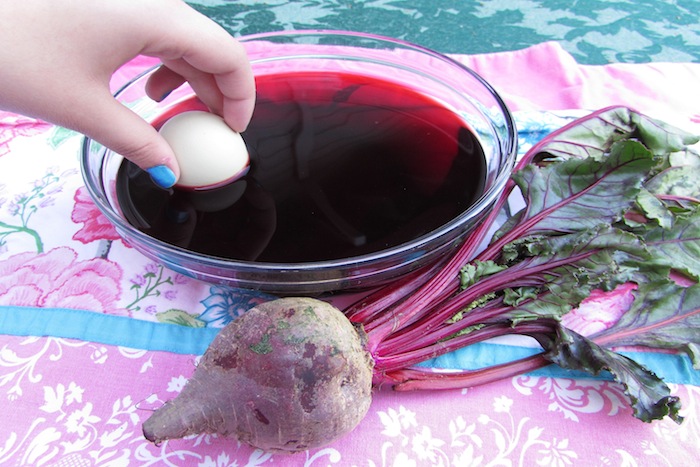
AP Photo by Chris McLaughlin via St. Lynn's Press -For red or lavender eggs: Red onion skins (3–4 skins or 1 cup) -For orange eggs: Yellow onion skins (3–4 skins or 1 cup) -For yellow eggs: Turmeric (1 tbsp per cup of water) -For pink eggs: Beets (1 pound, shown below) -For blue eggs: Red cabbage (A quarter-head) -For various colors or a base to paint over: Fresh or frozen berries, not canned. Also experiment with grass, paprika, flower petals, and banana peels.How to use the hot method for natural easter egg dyes
Using a hot bath means that the eggs are colored at the same time they're being hard-boiled. This is faster, say if you're creating centerpieces and need a lot of eggs completed at once, but not necessarily as fun if you're crafting with kids. 1. Simmer the plants or vegetables in a pan of water for 15 minutes or so, then strain out the plant dyestuff so just the liquid remains in the pot. 2. Add your eggs directly to a large pot and add enough water to cover the eggs by about 2-inches. 3. Add 1/8 cup of vinegar, then bring the pot to a boil for 17–20 minutes. Done!