
Today marks International Holocaust Remembrance Day, or Holocaust Memorial Day. It's particularly poignant this year, with the 75th anniversary of the liberation of Auschwitz-Birkenau Death Camp.
The sad truth is, the older we all get, the more the survivors and liberators of WWII pass on, the harder it will be to preserve the stories, teach one of history's hardest lessons, and fight the deniers.
(At top: Survivor Irene Weiss describes a historical photo of herself at 13, at the liberation of Auschwitz.)
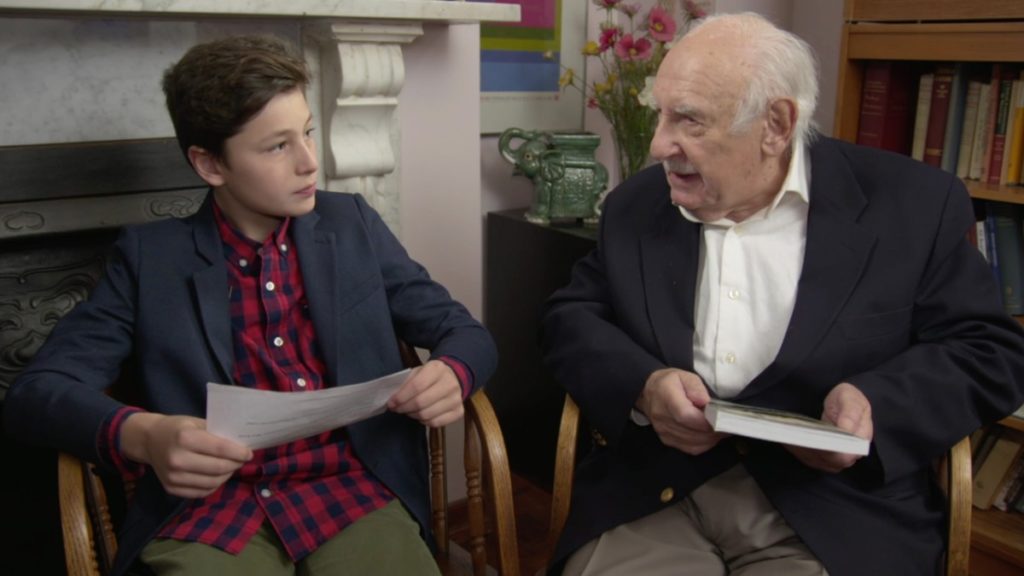 Above: Jack Feldman, Holocaust Survivor, featured HBO's The Number on Great-Grandpa's Arm.
There's no better way to teach the dangers of demonizing and scapegoating whole groups based on ethnic, religious or racial identity; or from a political standpoint, how fascism rises. In fact, in a recent Pew study, only one-third of teens were aware that Hitler was democratically elected by the people of Germany. So we definitely need to talk to our kids more about the lessons we've learn from "Good Germans" and soldiers "just following orders."
But above all, talking about the Holocaust helps us our kids the critical importance of empathy, kindness, inclusion, fighting injustice in all its forms, standing up for other people -- and the triumph of hope, even against the greatest of horrors. The more of us there are in the fight, the greater the chance that hope wins.
Above: Jack Feldman, Holocaust Survivor, featured HBO's The Number on Great-Grandpa's Arm.
There's no better way to teach the dangers of demonizing and scapegoating whole groups based on ethnic, religious or racial identity; or from a political standpoint, how fascism rises. In fact, in a recent Pew study, only one-third of teens were aware that Hitler was democratically elected by the people of Germany. So we definitely need to talk to our kids more about the lessons we've learn from "Good Germans" and soldiers "just following orders."
But above all, talking about the Holocaust helps us our kids the critical importance of empathy, kindness, inclusion, fighting injustice in all its forms, standing up for other people -- and the triumph of hope, even against the greatest of horrors. The more of us there are in the fight, the greater the chance that hope wins.
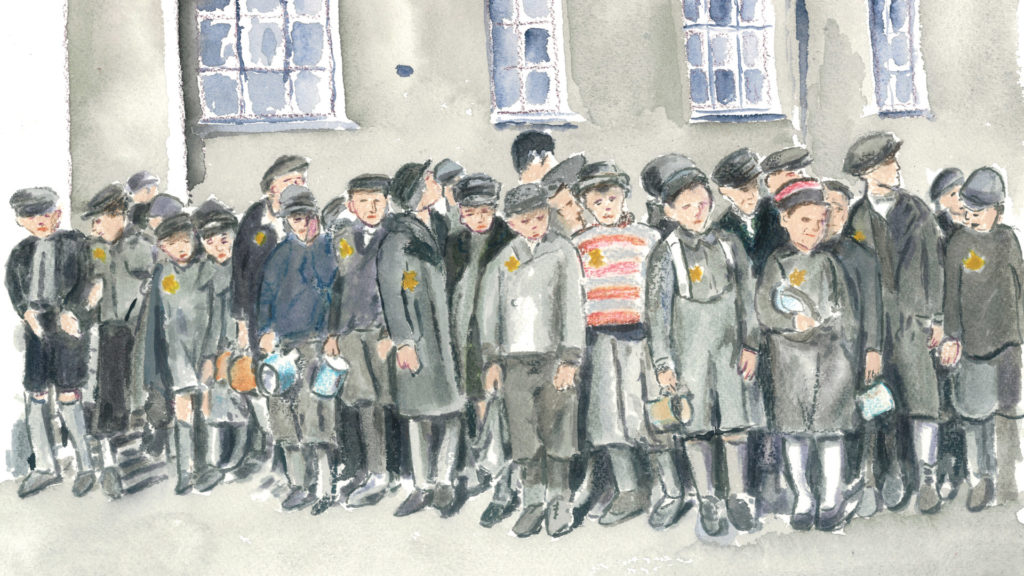 The Number on Great Grandpa's Arm (above) is HBO's Emmy-winning, animated documentary that's perfect for kids. It's just 19 minutes long and beautifully done. Well worth a watch.
What's really compelling to me, in addition to the film are the short companion films of interviews with Holocaust survivors by children. It's on a resource page that also includes bios with more information on each of the subjects of the films. I highly recommend them.
The Number on Great Grandpa's Arm (above) is HBO's Emmy-winning, animated documentary that's perfect for kids. It's just 19 minutes long and beautifully done. Well worth a watch.
What's really compelling to me, in addition to the film are the short companion films of interviews with Holocaust survivors by children. It's on a resource page that also includes bios with more information on each of the subjects of the films. I highly recommend them.
Related: 8 books that teach kids about the Holocaust. Because we haven’t forgotten, and neither will they.
Lots of us adults may still remember WWII soldiers marching in Memorial Day parades as kids, or watching living Holocaust survivors tell their harrowing stories on TV news specials. With those numbers dwindling, the passage of time creates fewer opportunities that invite natural conversations with our kids, the way we might have had with our own parents. A recent Pew report about Holocaust knowledge reveals when someone has actively studied the Holocaust, visited a Holocaust museum, or even knows someone is Jewish, they are more likely to have accurate information. It makes perfect sense -- there's nothing more compelling than hearing the actual words and first-hand accounts of survivors, or the accounts via their own families. Of course we can't all make it to a Holocaust museum (though we should aim to at least once in our lives), so I'm grateful for all the first-person interviews available online. Interviews with survivors can help kids understand so much in such a profound way, because it personalizes the experience, making something so big and general in the long-ago past (to a child) feel very present and specific.
Above: Jack Feldman, Holocaust Survivor, featured HBO's The Number on Great-Grandpa's Arm.
There's no better way to teach the dangers of demonizing and scapegoating whole groups based on ethnic, religious or racial identity; or from a political standpoint, how fascism rises. In fact, in a recent Pew study, only one-third of teens were aware that Hitler was democratically elected by the people of Germany. So we definitely need to talk to our kids more about the lessons we've learn from "Good Germans" and soldiers "just following orders."
But above all, talking about the Holocaust helps us our kids the critical importance of empathy, kindness, inclusion, fighting injustice in all its forms, standing up for other people -- and the triumph of hope, even against the greatest of horrors. The more of us there are in the fight, the greater the chance that hope wins.
HBO short interviews between children and Holocaust survivors
The Number on Great Grandpa's Arm (above) is HBO's Emmy-winning, animated documentary that's perfect for kids. It's just 19 minutes long and beautifully done. Well worth a watch.
What's really compelling to me, in addition to the film are the short companion films of interviews with Holocaust survivors by children. It's on a resource page that also includes bios with more information on each of the subjects of the films. I highly recommend them.
Related: 8 outstanding books that teach empathy for kids with special needs


