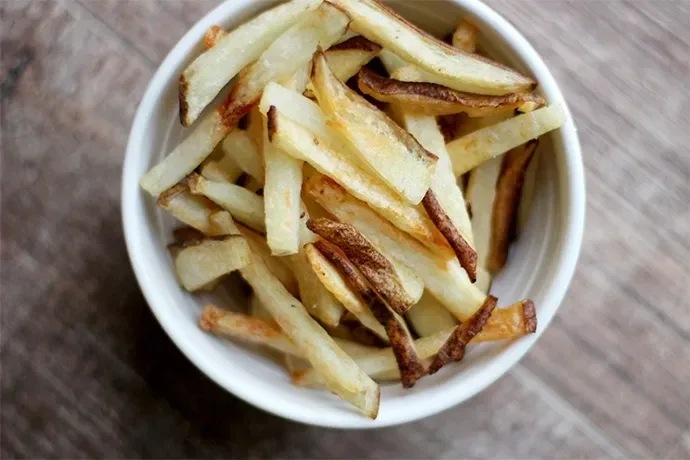
Homemade french fries are amazingly delicious, but they are also a pain to cook, which is why I never make them. My friend (and our lovely editor), Stacie, recently introduced me to the idea of homemade freezer fries, which has completely changed the game. I recently learned how to make homemade freezer french fries and now fries are a reality in our home whenever I want them to be—and not the soggy take-out kind.
After reading up on several methods, I developed this homemade freezer french fries recipe. The results are crispy, gourmet fries that are as easy to make as turning on the oven. Yes, there is some prep work ahead of time, but that prep work pays off big time.
Related: How to make pizza pinwheels with kids, plus the best no-cook pizza sauce recipe.
How to make homemade freezer french fries: A few tips
When I came up with the following recipe, which is more of a technique than anything, I took a few things into account that turned out to be key. * Soak: The best homemade french fries require a soaking period, which is why I used to never make them. By prepping the fries ahead of time in a large batch, though, the soaking step doesn't feel quite so cumbersome. Why soak at all? Soaking the potatoes in cold water prior to cooking removes excess starch, which helps prevent the fries from sticking together and gives them a great crispy outer texture. * Roast: The most delicious french fries are usually double fried. But frying = a pain in the butt, so I decided to roast my fries instead. To replicate the double frying method, though, I par-boil the potatoes prior to freezing. That way, when they roast later, that first "cook" is already done. This combination of par-boiling before freezer and oven roasting after results in fries with a creamy interior and crispy exterior, as it should be. You honestly won't believe that these fries came out of the oven! * Freeze: Freezing goes without saying since this is, after all, a recipe for freezer french fries, but it's worth pointing out that freezing them is part of what makes the prep so worthwhile. When you do the prep for a single dinner—and then the fries are gone—it's just not the same as when your efforts result in a freezer full of frozen fries that are ready to go at a moment's notice.Related: How to make mashed potatoes in a slow cooker.
How to make homemade freezer french fries: Prep in 6 simple steps
* Step 1: Wash and cut the potatoes. To figure out how many potatoes you'll need, figure that one large russet potato makes about 3 servings (as a side, ahem). It will also fill one baking sheet for freezing and roasting. Once you've washed (but not peeled, unless you have a thing against potato skins) all of your potatoes, cut them into fries that are uniformly sized so that they cook evenly later on. Feel free to go skinny or thick, whatever you preference. Our family likes fries on the thinner side because they get nice and crispy. They also cook faster, which is a plus on busy nights. Step 2: Par-boil the fries. Once the potatoes are cut, put them into a large pot of vigorously boiling water. Boil for 3-5 minutes, until the potatoes are just starting to soften, but are still firm. Step 3: Soak the fries in cold water. While the potatoes are boiling, fill a large mixing bowl halfway with water and fill the rest with ice. When the potatoes are done boiling, drain and dump them into the ice water bath. If the ice melts immediately, add a few more cubes to keep the water cold. Let the potatoes soak for at least 1 hour or up to 8 hours, placing in the fridge if you plan to soak them longer than an hour or two. If you are prepping a large batch of freezer fries, this lenient soaking period is great: After an initial 1-2 hour soak for all of the fries, you can start freezing one or two trays at a time while the rest of the potatoes continue to soak. Step 4: Pat the potatoes dry. Drain the potatoes and pat them dry. Simple business. Step 5: Freeze the fries. Line a large cookie sheet with parchment paper and place the potatoes in a single layer on top. Drizzle with about 1 tablespoon of canola or olive oil and sprinkle with a light dusting of salt or seasoning of choice, tossing the fries with your hands to ensure that they get coated evenly. Then, place the baking sheet in the freezer for about 2 hours. The trick here is to freeze them enough so that you can bag the fries without the potatoes sticking together. In my experience, you do not need to freeze them on the baking sheet overnight as some other recipes indicate. In fact, when I've allowed the fries to stay in the freezer too long at this point, they've frozen together in a way that impeded cooking later on. Step 6: Bag the frozen fries. Transfer the frozen fries from the tray to a freezer-quality bag or an airtight container. If you store them well (really, airtight), then they can last several months without getting icky freezer burn. No matter what, they should still be fine for up to 2 months.Related: Scrumptious side dishes made with frozen vegetables to make life easy.


