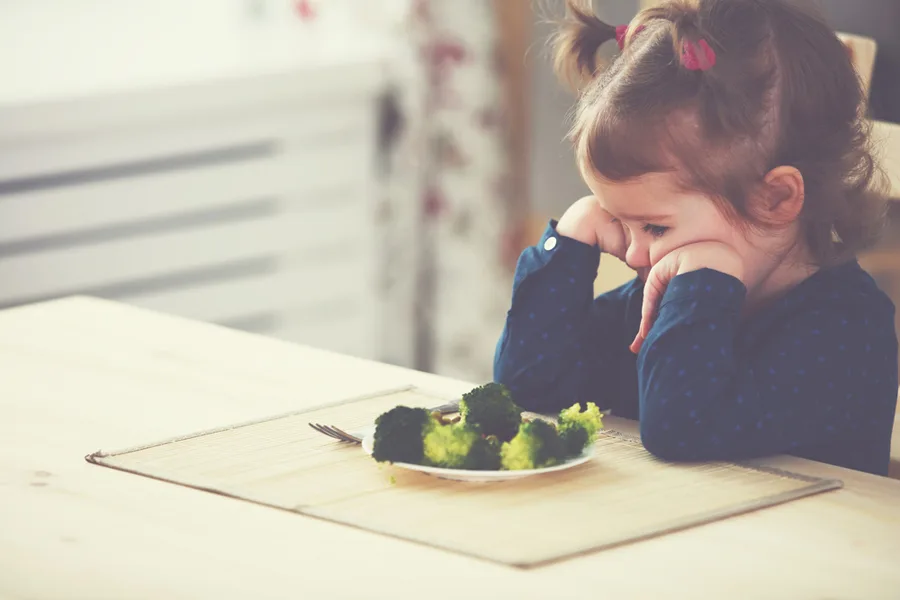
A recent and somewhat controversial article, "Here's Why You Should Pay Your Children to Eat Their Vegetables," at The Wall Street Journal has been causing a bit of chatter among the Cool Mom team. The article highlights a recent study done by the Journal of Health Economics that suggests it’s okay—and actually a good idea—to pay kids to eat their fruit and vegetables.
I beg to differ.
My immediate reaction to the article was that paying children, whether in cash or with a toy, will negatively skew a child’s perception of and relationship with healthy food. It sends the message that some foods aren’t tasty enough to be enjoyed without incentive. Shouldn’t we be doing our best to put vegetables on par with everything else on the plate?
That said, I’m not immune to the struggles of parenting a picky eater, so I get the appeal of a suggestion—any suggestion—to get kids to eat more produce. In fact, just last night I “bribed” my toddler with the prospect of a cookie for dessert if she ate all of her dinner. You may be thinking that this is hypocritical, and it very well may be. Our own editor, Stacie, wondered how different it is to promise dessert versus money after eating veggies, but I think there is a difference. A big one.
I see offering dessert at the end of a well-balanced meal as encouraging kids to eat a variety of foods and to understand that different foods play different roles in a healthy diet. For me, that's a far cry from calling out fruits and vegetables as the bad guys. And though setting a precedent that children are entitled to a reward for eating fruits and vegetables may work in the short term, I can just imagine my kids coming home asking for more money or incentives, turning a small reward into a drawn out negotiation.
Beyond my philosophical differences with the findings, there are some serious questions regarding the research methodology and data interpretation. Russell Miller, the cognitive neuroscientist at Small Humans Science, shares his impassioned counterpoint to the article. Among other things, he points out that The Wall Street Journal didn't report how much produce the kids were eating after five weeks of being offered a monetary reward. If they take a bite or two and then toss it in the trash, what’s the point?
Related: Creative ways to pack vegetables for school lunch so your kids actually eat them.


