Related: How to cook quinoa so that it's fluffy, mild and delicious–even kid friendly.
Farro
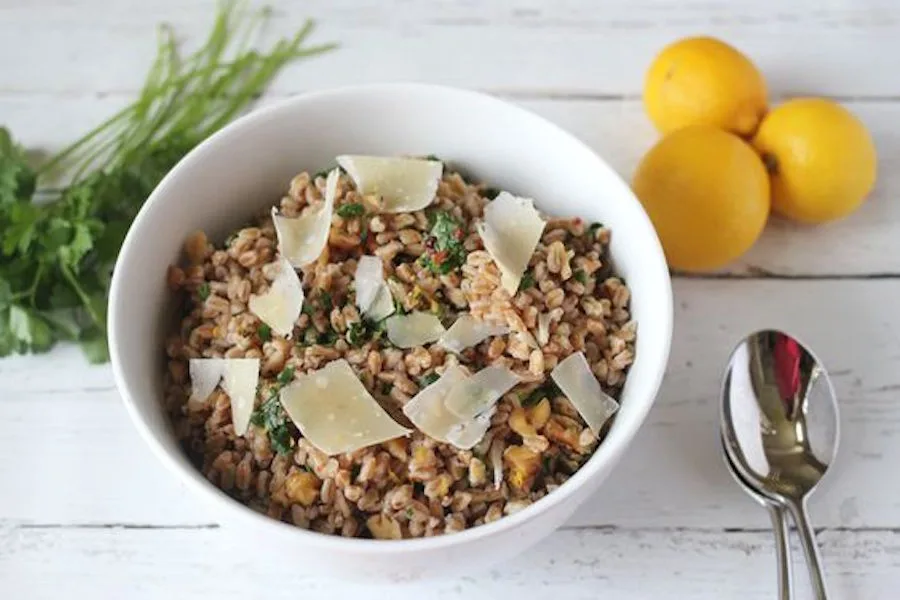
Farro, a type of hulled wheat and my family's favorite, has a nutty flavor and chewy texture. I find that it offers something a little heartier -- and often tastier -- than regular pasta (yes, really). And cooking it is foolproof: Dump it into some salted boiling water and keep tasting until you think it’s done.
I toss warm farro with dressing and anything else I fancy for a nourishing “salad.” It's also great tossed with butter and roasted vegetables (particularly sweet potatoes) for the kids. In short, you can use it in any way you would cut pasta or rice.
Try: Simple Farro Salad at Family Food on The Table (top). Go light on the red pepper flakes and top with a simple chicken breast or your child’s favorite vegetable. Or nothing at all!Barley
Dear barley, first and foremost, thank you for existing and making beer. Beyond beer, barley has a wonderful, tender chewiness that lends volume to many dishes. I love using it as a fat-free way to bulk up soups and stews, and it’s a great way to elevate an ordinary salad into a meal. The most common type is pearled barley, which means that the exterior part of the bran has been removed. But what remains still has plenty of nutrition and great texture, and I find it cooks more quickly than whole barley. Try: The vegetarian Bean and Barley Veggie Soup at Circle B Kitchen. Simple in the best possible, and tastiest, way.**************************
PRO TIP: Grains are susceptible to going rancid so make sure you store in air-tight containers in a cool, dark place or the refrigerator. Always give your grains a sniff and a peak before cooking.**************************
Amaranth
Naturally gluten-free and a complete protein, amaranth is the little grain that could. It’s a bit trickier to cook with, though, given it’s slightly crunchy texture. Also, it's good to know that it has an earthy flavor -- nothing too crazy, but think whole wheat or brown rice versus the white versions of either. Amaranth can be used to thicken soups (you don’t need very much), toss into your favorite granola, or cook like oatmeal to make a porridge-like breakfast. This tiny grain is so wholesome that I feel good sneaking in a little wherever I can. Try: The mouthwatering, gluten-free Amaranth Breakfast Porridge with Blueberry Compote at Feed Me Phoebe.Related: How to make instant oatmeal as nutritious as the slow cooked kind.


