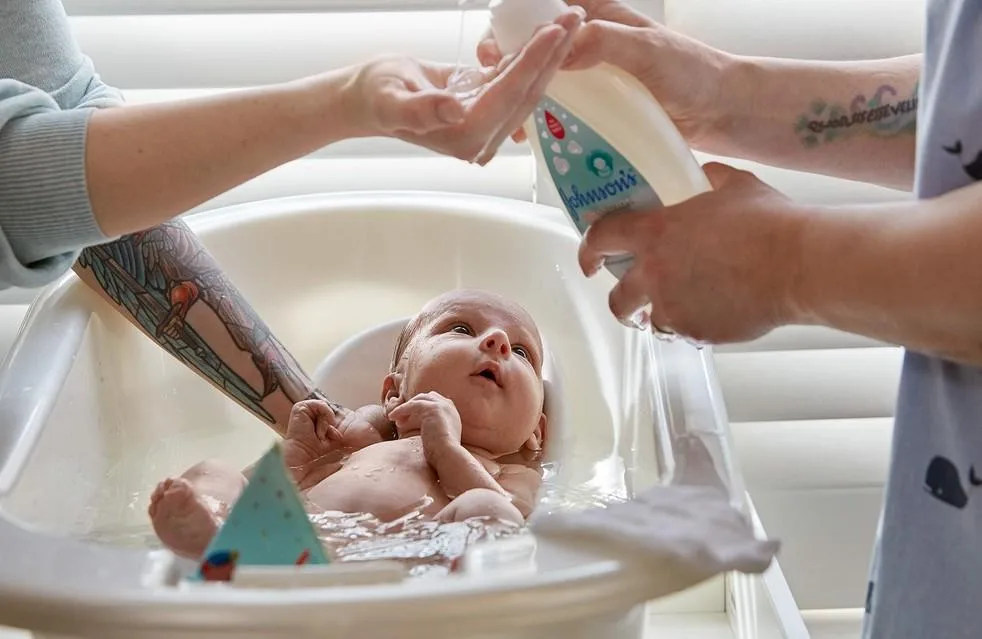
We’ve recently shared the scientific research behind a baby bedtime routine, and one of the biggest of that is giving your baby a bath. While it may end up being one of the most enjoyable parts of your evenings (with the best memories and the best photos to prove it!) we know it can be intimidating at first.
So here, we’re sharing some of the top tips for giving your baby a bath.
While our partner Johnson’s happens to be a leader in infant care research — so much so that other brands use their research to inform their own product formulations too — it’s great to know that so many trusted resources come to similar conclusions about babies and bath time.
After all, new parents can use all the reassurance we can get.
How to Bathe Your Baby: It’s pretty easy!
Note: Before we agreed to partner with Johnson’s on this series, we did our own research about their growth and evolution in terms of ingredients, practice, and transparency. As parents ourselves, we are incredibly conscientious about the brands we work with and we felt good about what we learned.
We are firm believers in supporting brands who listen to customer feedback, respect new scientific data as it emerges, and show a genuine commitment to safety and transparency.
Therefore, we present the following post on behalf of Johnson’s®.
8 Easy Steps
Your baby has extremely delicate skin and needs special care. But you know that — it’s why new parents can be intimidated with this new routine. Fortunately, it’s actually pretty simple and since you’ll be doing it two to three times a week for the first few weeks, you’ll get the hang of it before you know it.
This video from Johnson’s offers a great overview! (And such a cute baby!) But here are some more specifics:
1. Get everything you need ready.
-baby wash
-cotton pads
-a clean, soft towel (warm is better)
-a soft washcloth or sponge
-a plastic cup for pouring water
2. Make sure the bathroom air is warm.
Babies get cold easily, so ideally you want a room that’s about 75-80 degrees. But don’t worry about it too much.
Tip: If you run hot water in the bathtub or shower before you begin (not in the baby bath tub!), it should warm things up nicely.
3. Test the temperature of the water, then run a few inches into an infant tub or sink.
The AAP’s Healthy Child website offers clear guidelines for bath time, like being sure to run warm, not hot water.
Swirl your hand around to make sure there are no hot spots. You want it deep enough to be able to cover your baby pretty well, so they don’t get cold. (But you’re only submerging your baby after the umbilical cord falls off.)
Tip: a warm, wet washcloth over their little baby belly can help keep it warm, if it’s sticking out fro the water. So be sure you have that washcloth by your side! It really does come in handy.
4. Lower your baby in gently, supporting the head the whole time
This is important, whether you’re using a baby bathtub, which you can put right into your big bathtub — or you can even bathe newborns in a kitchen or bathroom sink. Don’t worry about having the “best” baby bath tub known to man. It’s about the ritual and the bonding experience more than it is any fancy gear.
What’s most important is that you never ever leave your baby alone in a bath, even for a second. If it’s helpful, have another adult join you, just for a little extra boost of confidence those first few times.
5. Wipe your baby’s eyes gently with cotton pads. Lightly wash your baby’s head and body with a gentle baby wash.
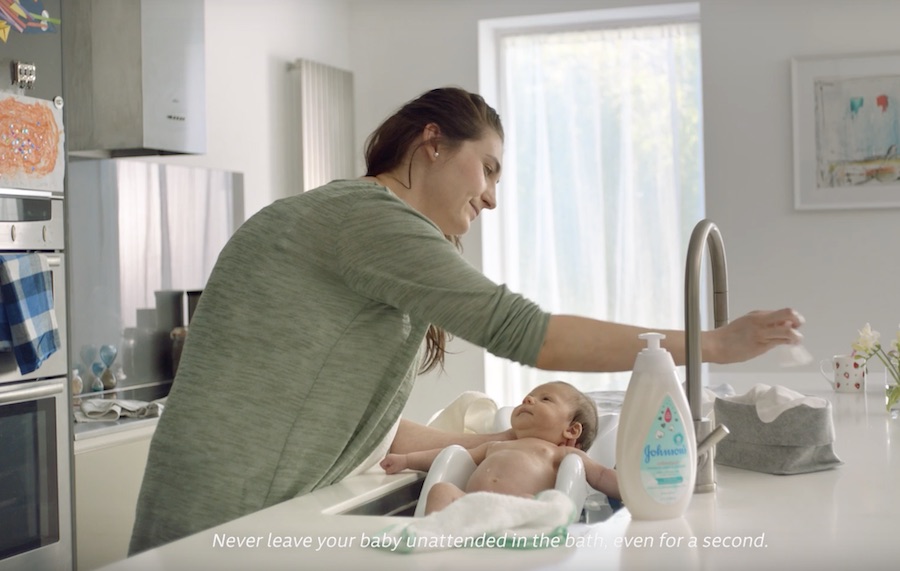
Keeping your baby in the water, you want to wash very gently everywhere — using cotton pads for the eyes, and a soft newborn washcloth or a sponge for the body.
Start with the chest, then go down your baby’s body, one small section at a time, paying special attention to those baby creases — elbows, behind the knee, behind the neck, behind the ears.
Washing with water alone can dry out a baby’s delicate skin. So while your baby isn’t dirty per se, you do want to gently wash away diaper lotions and other fats and oils that can build up over the course of the day.
So, do you go with scented or unscented? That’s up to you.
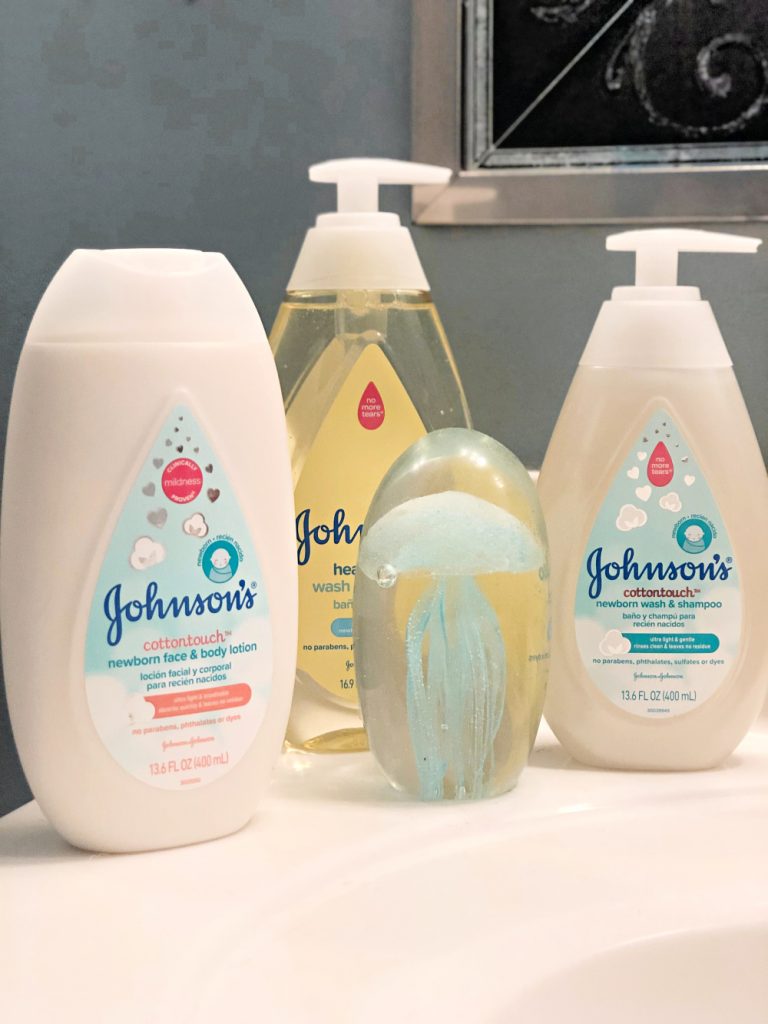
There’s 15 years of published clinical research about the value of fragranced bath products, indicating that lightly scented products can increase relaxation, and enhance sleep. In fact, bathing infants with fragranced bath products has been proven reduce infant stress and crying before sleep by 23.7%, and increase by nearly 33% the time spent in deep sleep, when compared with unscented bath products.
It’s up to you though; what’s most important is getting to know your baby’s skincare needs.
Sometimes parents have to try a few different formulations to see what they like best and that’s totally normal.
6. Rinse time!
Finally, squeeze out a washcloth or use a cup to drip warm water over your baby’s belly and body. Again, make sure you rinse every little crease and fold.
This is where you realize how quickly it all goes. It’s actually a good idea to keep baths short until your baby gets used to the experience — and hopefully grows to love it. Especially the time with you.
7. Pat dry with a soft towel
Right away, you want to take your baby from the warm bath into the comfort of a warm towel. Don’t rub, just pat them dry, from their hair and face down to their toes.

Photo: Marvin Lewis on Unsplash
8. Follow with an infant massage.
Here’s more info on the benefits of infant massage which has all kinds of incredible, research-based benefits for both your baby (like better sleep!) and for your bonding experience in general.

Check out the abstract on the NIH summarizing clinical research that establishes that a pre-bedtime massage helps newborns receive a strong nighttime cue to adjust to a better sleep-wake cycle by 8 weeks. The Mayo Clinic further explains that massage helps babies relax and sleep, reduces crying, and positively impacts infant hormones that control stress.
Wondering how to do it? For excellent tips on how to massage your baby, Johnson’s offers lots of specific tips and tricks including a helpful video about baby massage.
Thanks to our partner Johnson’s for putting out so much information and research to help make parents’ lives easier.
All information is accurate to the best of our knowledge, but please consult your physican for specific questions about infant health


Leave a Reply