This morning I woke up to the study that's making the rounds on Twitter: Nearly 2/3 of US young adults are unaware that 6 million Jews died in the Holocaust -- some get the numbers wrong, some didn't know at all. Dig deeper into the survey results from The Claims Conference and there's even more to be disturbed about.
This post has been lightly edited for clarity and accuracy
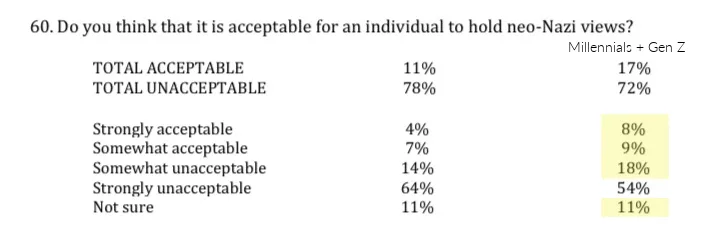
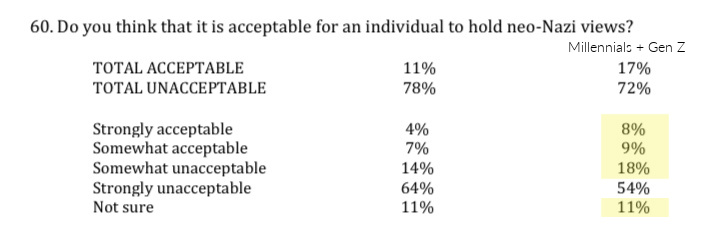
Out of the thousand 18-39-year-old adults surveyed in 2018, 23% wrongly believed the holocaust was "exaggerated," or a myth entirely -- or they just weren't sure. Eleven percent believed Jews themselves were responsible for the Holocaust. As for the number of people who believe that holding neo-Nazi views isn't strongly unacceptable: Nearly half.
 That disgusts me.
Is it any surprise that anti-Semitic crimes are hitting record levels? How many times do we need to hear George Santayana's famous quote, "those who cannot remember the past are condemned to repeat it."
That disgusts me.
Is it any surprise that anti-Semitic crimes are hitting record levels? How many times do we need to hear George Santayana's famous quote, "those who cannot remember the past are condemned to repeat it."
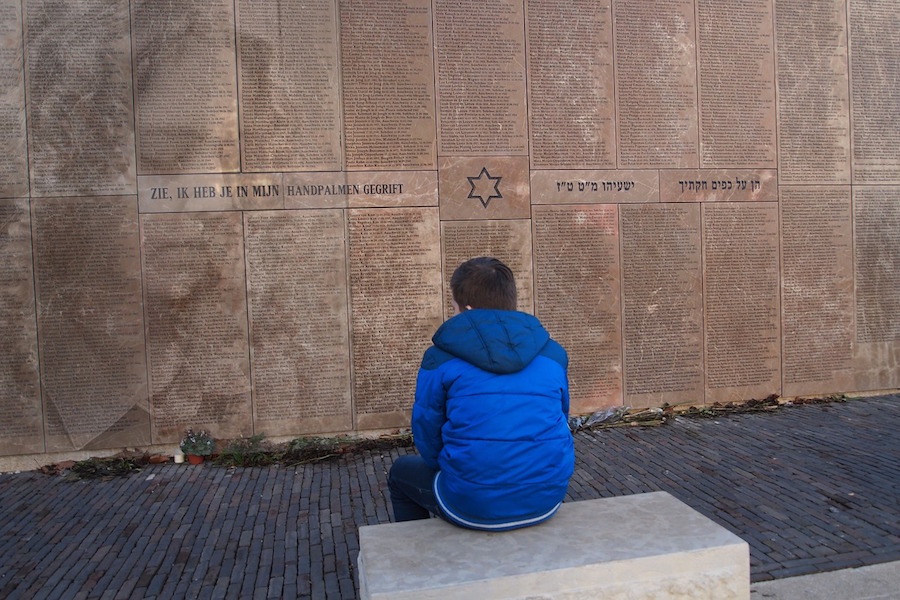 It's easy to blame American ignorance in general, and yet there are similar results in a French study, in which 25% of Millennials hadn't heard of the Holocaust, and 69% didn't know 6 million Jews had been murdered. It seems that the more time passes, the. more we all become ignorant about history.
It's easy to blame the US school curriculum, considering only 15 states currently require public schools to teach the Holocaust (and states in the middle of the country and the south are noticeably underrepresented in that list, ahem). But I'm hopeful that number increases, with the 2020 bipartisan passage of the Never Again Education Act, which expands funding for the US Holocaust Memorial Museum’s education programming and resources so they can reach more classrooms.
I guess there's a lot of blame to go around.
And while I'd rather think about solutions -- and I'll get to that in a minute -- I do need to call out what I think is about the worst parenting trend over the past decade or two: the mantra, I just want to keep my kids innocent.
Parents: We have to stop it with that.
It's easy to blame American ignorance in general, and yet there are similar results in a French study, in which 25% of Millennials hadn't heard of the Holocaust, and 69% didn't know 6 million Jews had been murdered. It seems that the more time passes, the. more we all become ignorant about history.
It's easy to blame the US school curriculum, considering only 15 states currently require public schools to teach the Holocaust (and states in the middle of the country and the south are noticeably underrepresented in that list, ahem). But I'm hopeful that number increases, with the 2020 bipartisan passage of the Never Again Education Act, which expands funding for the US Holocaust Memorial Museum’s education programming and resources so they can reach more classrooms.
I guess there's a lot of blame to go around.
And while I'd rather think about solutions -- and I'll get to that in a minute -- I do need to call out what I think is about the worst parenting trend over the past decade or two: the mantra, I just want to keep my kids innocent.
Parents: We have to stop it with that.
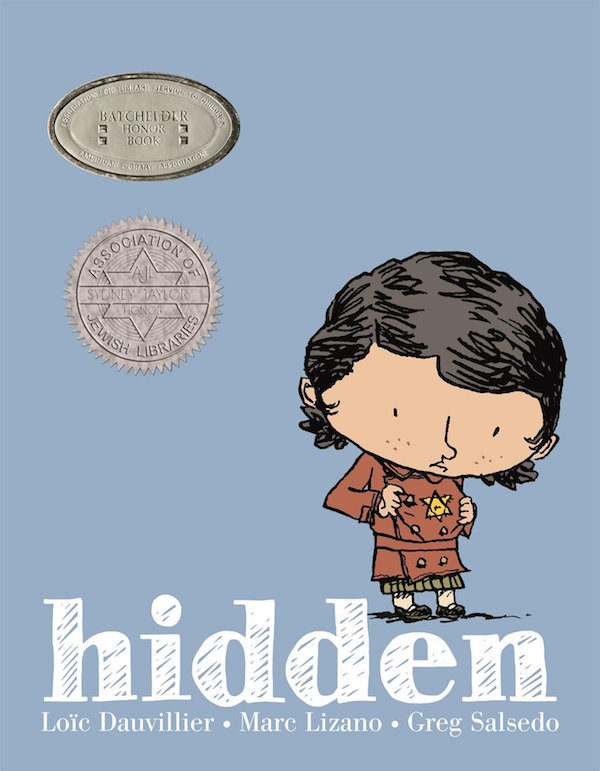 *These 8 books teach kids of all ages about the Holocaust, from picture books for kids in second grade and up, to YA books and novels that will appeal to adults too.
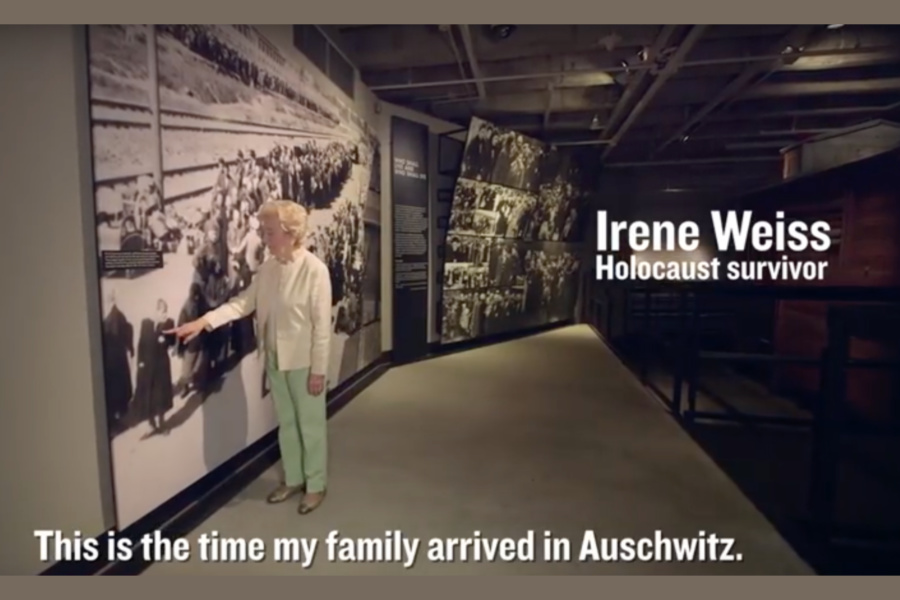 *These outstanding videos and resources teach our kids about the Holocaust, including videos from survivors from the Holocaust Museum in DC (above), to HBO's much-lauded 19-minute documentary short, The Number on Great-Grandpa's Arm, shown at very top.
 *These These expert tips help parents with tough talks about everything from school shootings to racism and bigotry, police brutality, school shootings, and more.
Yes, the Holocaust is a tough thing to talk about. But so are we. And while the blame for ignorance doesn't entirely fall on parents, we have the ability to pick up some of those pieces and make things right. As we always do.
Besides, not teaching our kids about it really isn't an option.
Or to condense it into a hashtag, 21st century style, that kids can understand: #NeverForget.
*These These expert tips help parents with tough talks about everything from school shootings to racism and bigotry, police brutality, school shootings, and more.
Yes, the Holocaust is a tough thing to talk about. But so are we. And while the blame for ignorance doesn't entirely fall on parents, we have the ability to pick up some of those pieces and make things right. As we always do.
Besides, not teaching our kids about it really isn't an option.
Or to condense it into a hashtag, 21st century style, that kids can understand: #NeverForget.
That disgusts me.
Is it any surprise that anti-Semitic crimes are hitting record levels? How many times do we need to hear George Santayana's famous quote, "those who cannot remember the past are condemned to repeat it."
So. Who's to blame about Holocaust ignorance?
It's easy to blame American ignorance in general, and yet there are similar results in a French study, in which 25% of Millennials hadn't heard of the Holocaust, and 69% didn't know 6 million Jews had been murdered. It seems that the more time passes, the. more we all become ignorant about history.
It's easy to blame the US school curriculum, considering only 15 states currently require public schools to teach the Holocaust (and states in the middle of the country and the south are noticeably underrepresented in that list, ahem). But I'm hopeful that number increases, with the 2020 bipartisan passage of the Never Again Education Act, which expands funding for the US Holocaust Memorial Museum’s education programming and resources so they can reach more classrooms.
I guess there's a lot of blame to go around.
And while I'd rather think about solutions -- and I'll get to that in a minute -- I do need to call out what I think is about the worst parenting trend over the past decade or two: the mantra, I just want to keep my kids innocent.
Parents: We have to stop it with that.
We have to talk about the hard stuff. It's our jobs.
Not teaching history is inarguably more harmful than teaching history. Or as my friend Kristin Brandt put it this morning, "By 'protecting' our kids from history, we doom them to repeat it." And there's research to back that up. Even so, I continue to hear the refrain about the innocence of kids all the time in discussions about current events from Black Lives Matter, systemic racism and family separation, to gun violence to natural disasters stemming from climate change -- on these very pages, in fact. Even discussing historic subjects that have created many of today's conditions for BIPOC -- like slavery in the US and the true story of Thanksgiving -- seem somehow scary for parents or "inappropriate" for kids and frankly, I just don't get it. As I've written before, it really is a factor of privilege to avoid discussing hard issues with our kids, just because you don't think it impacts them directly. And what's super important to know is that research from the American Psychological Association demonstrates that the more ignorant people are about a subject, the less interest they have in learning about it at all. Yikes. In other words, our job as parents is to raise our kids to grow into the best adults. We can't do that without also teaching them about the hardest aspects of the human existence, about suffering, bigotry, war, genocide. That's part of what we signed up for with this parenting thing.Kids can handle it.
Here's the thing: Kids can handle tough stuff. With very few exceptions -- and I know there are some -- kids really can handle a lot. When I was a child, the Holocaust miniseries was mandatory viewing in my school and we all read Diary of Ann Frank in fifth grade. During that time, I can't recall a single parent writing letters to the editor or angrily calling the school to protest the loss of a children's precious innocence. But maybe that's because as a Gen X-er, my childhood friends still had grandparents who had lived through WWII themselves, some of whom had even escaped death camps in Eastern Europe before emigrating to the US. Now, 75 full years after Auschwitz-Birkenau was liberated (ask your kids if they've heard of it by the way), how many children have ever had the chance to encounter an elderly person with a series of numbers tattooed on their arms? How many kids then had the opportunity to ask us what the tattoo means, sending us all to the library (or you know, Google) to help them get more information? If kids don't ask -- or don't even know there's a story to ask about in the first place -- then I think it's our job as parents to initiate these conversations, if not call for a stronger Holocaust curriculum in schools. We can do this.Holocaust resources for kids and parents
Over the years, we've covered any number of books, films, websites and educational resources to help parents talk to kids about hard subjects that don't necessarily come naturally to us, and the Holocaust and the history of anti-Semitism is one of those. Here are just a few terrific articles published here, if you need a place to start.
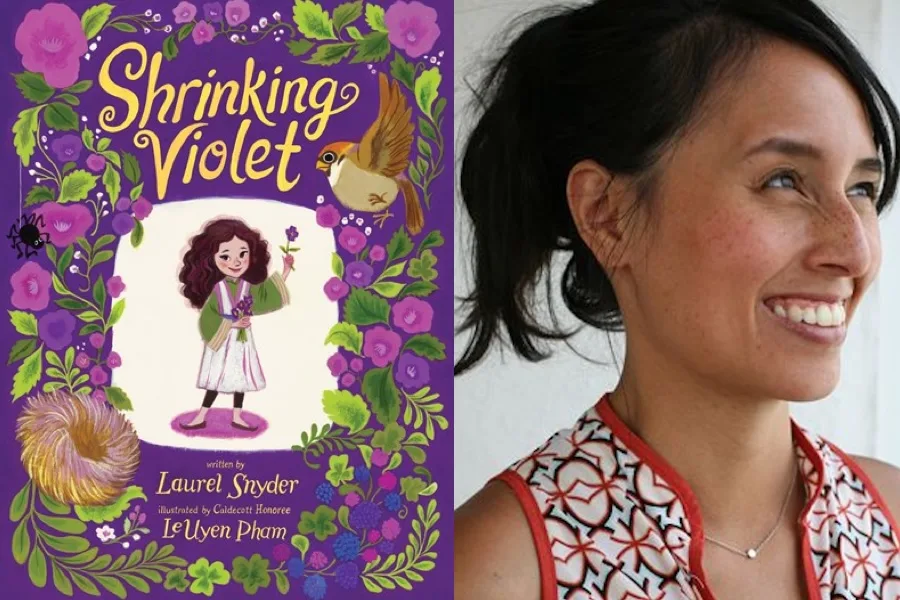
*These 8 books teach kids of all ages about the Holocaust, from picture books for kids in second grade and up, to YA books and novels that will appeal to adults too.
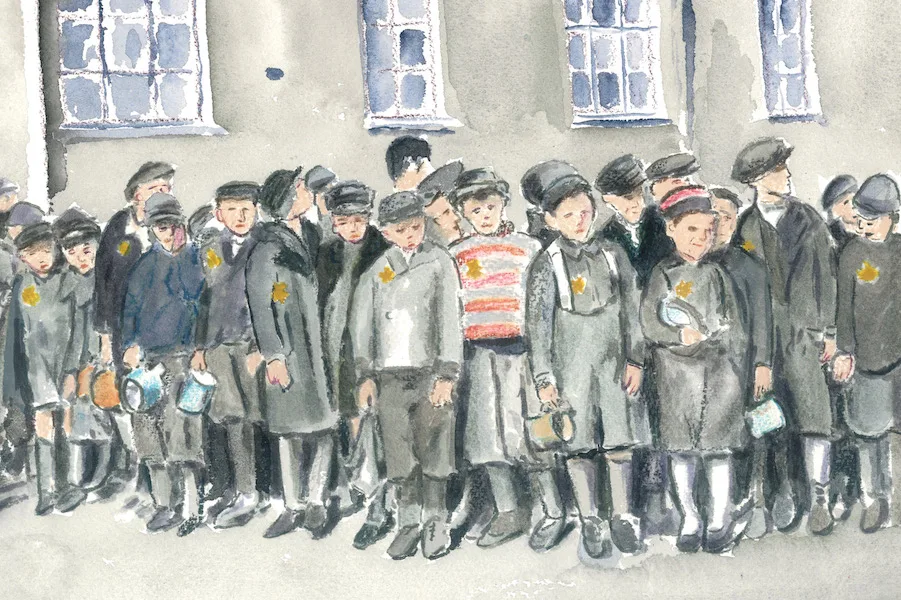
*These outstanding videos and resources teach our kids about the Holocaust, including videos from survivors from the Holocaust Museum in DC (above), to HBO's much-lauded 19-minute documentary short, The Number on Great-Grandpa's Arm, shown at very top.
*These These expert tips help parents with tough talks about everything from school shootings to racism and bigotry, police brutality, school shootings, and more.
Yes, the Holocaust is a tough thing to talk about. But so are we. And while the blame for ignorance doesn't entirely fall on parents, we have the ability to pick up some of those pieces and make things right. As we always do.
Besides, not teaching our kids about it really isn't an option.
Or to condense it into a hashtag, 21st century style, that kids can understand: #NeverForget.